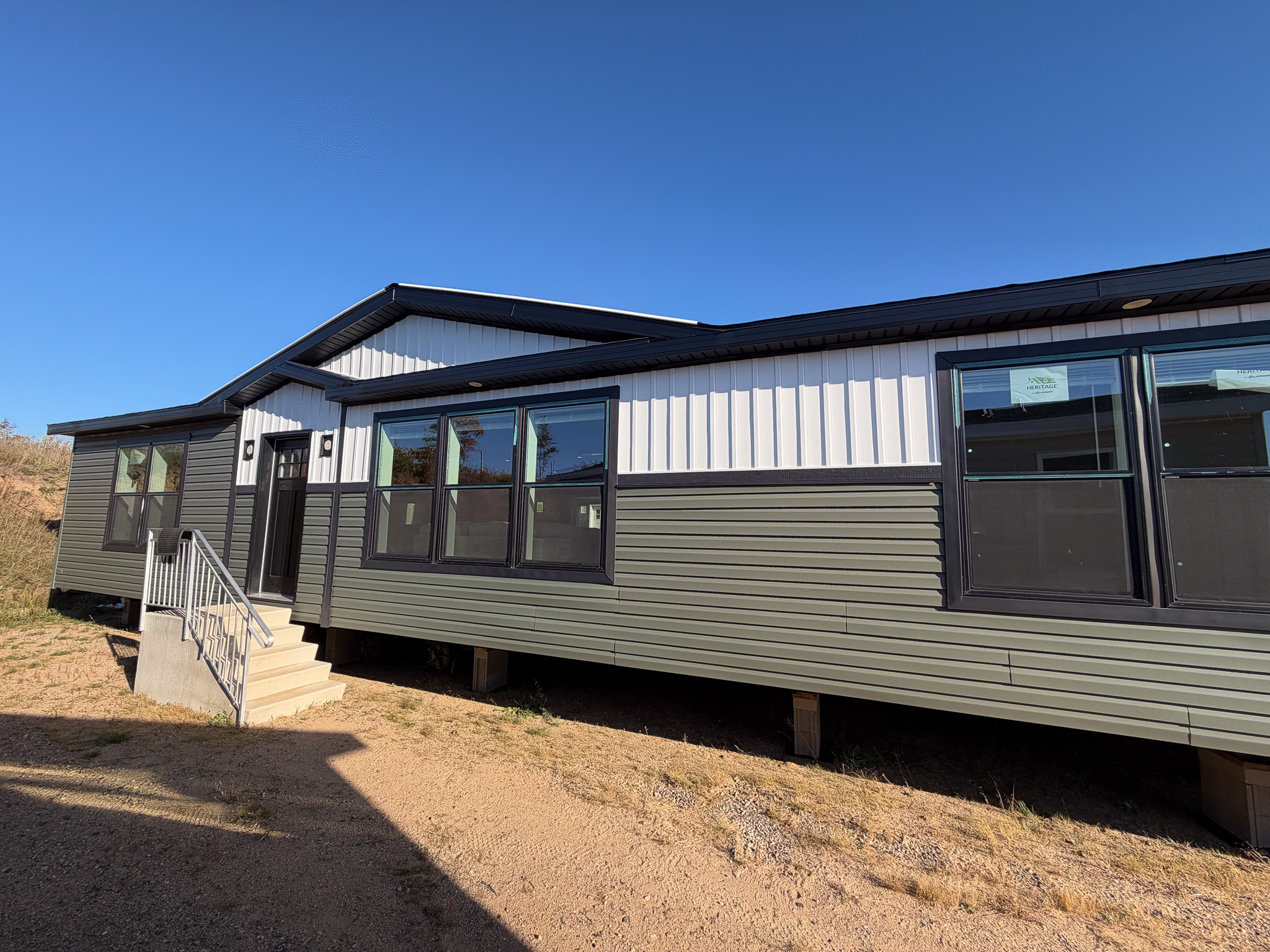
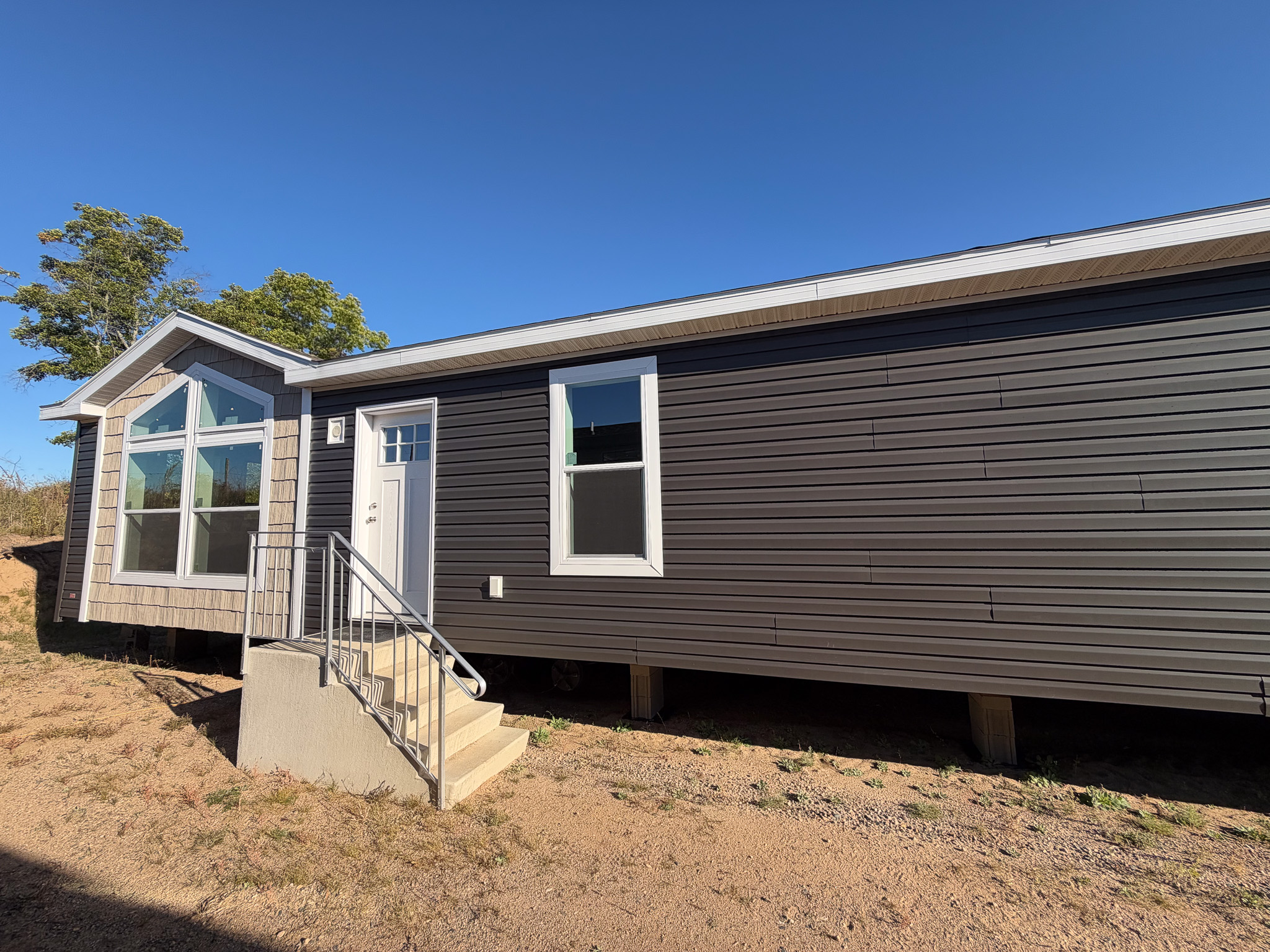
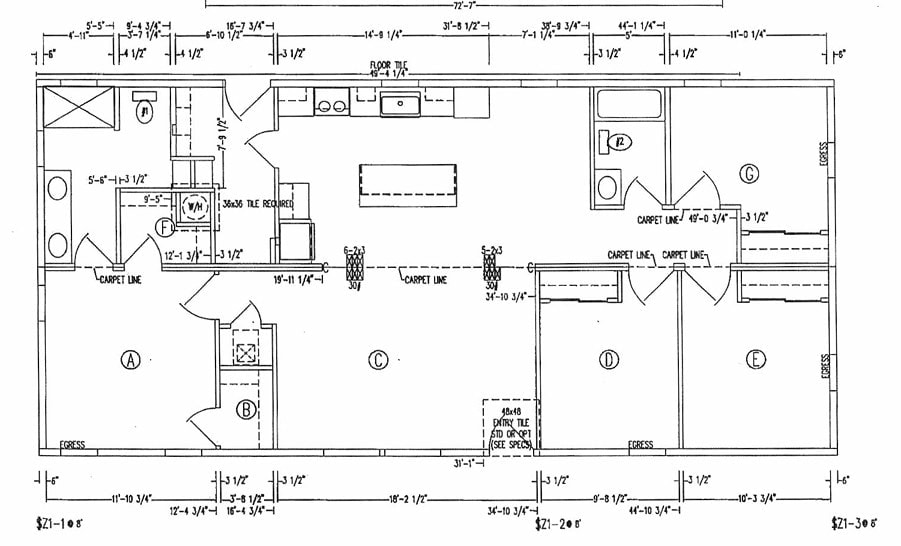
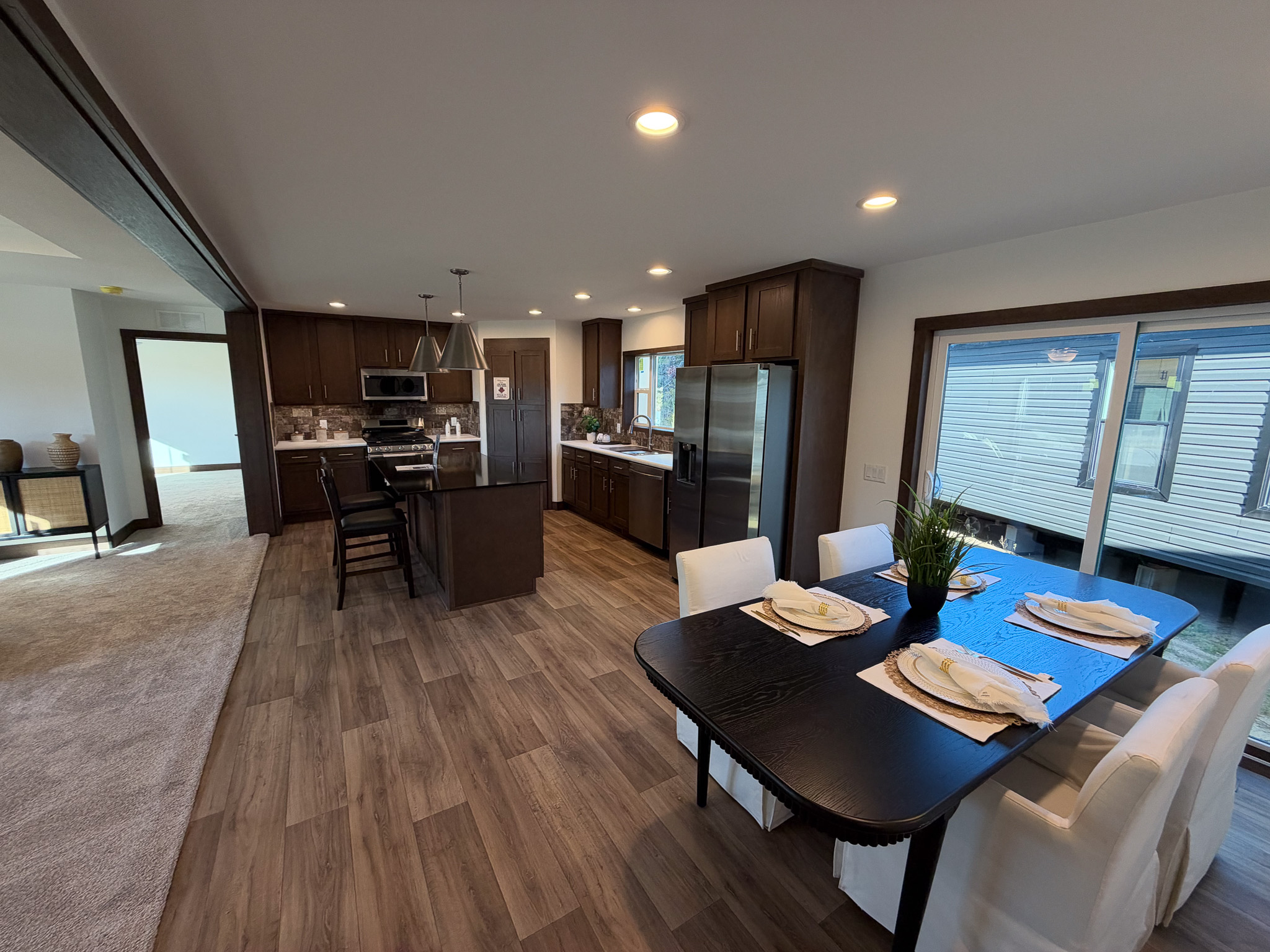
Available now
Modular homes
Modular homes are built to the same state and local building codes as a stick-built home, then crane-set onto your foundation in block sections. The result: a permanent home that's structurally stronger, faster to build, and indistinguishable from on-site construction once finished.
The basics
Modular homes are factory-built in block-shaped sections, transported on flatbed trucks, and craned into place on a permanent foundation, usually a basement or crawl space. Once the sections are joined, a finish crew completes the seams, the roof line, and any on-site work. From the curb, you can't tell the difference between a finished modular and a comparable stick-built home.
Three things set them apart:
Is it the right fit?
Side by side
Built to local code · permanent foundation
Built to HUD code · steel chassis stays
If your priority is a permanent home with full appraisal value and you're choosing between this and a stick-built, modular is usually the obvious answer.
Available now
Common questions
Yes. Banks, appraisers, and county assessors treat modular homes the same as comparable site-built homes. They appreciate alongside the local market.
You can. Modular homes qualify for conventional, FHA, VA, and USDA loans, the same loan products you'd use for a site-built home.
A lot. Most of the floor plans we sell are configurable before the factory builds them: you pick layout changes, finishes, fixtures, exterior options, and more. The catch is that customization happens up-front. Once the factory starts, changes get expensive.
On flatbed trucks. The sections roll up to your lot, a crane lifts each one onto your foundation, and a finish crew joins them, completes the roof, and finishes interior seams. The set itself usually takes a day; the finish work runs another week or two.
The Lexington A243, Arlington Advantage J399, and Legend 412 are all on our lots, all orderable as modular. Stop in.